

This page will help you to read the data in the PER, in particular, course completion and qualification completion information.
Exemplar 1
[successful course completions image]
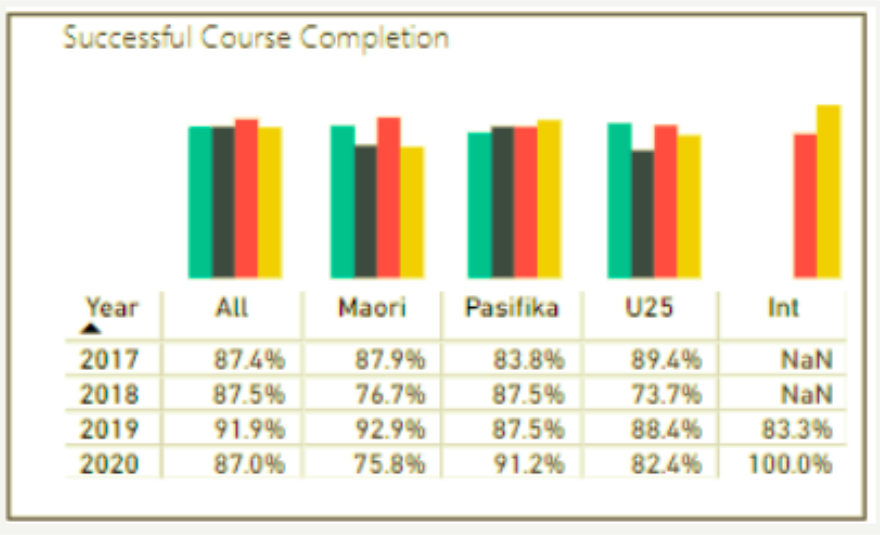
This table shows you the overall course completion rate for your programme in the calendar year. It is also broken down by priority learners.
Exemplar 2
[completion rate by course image]
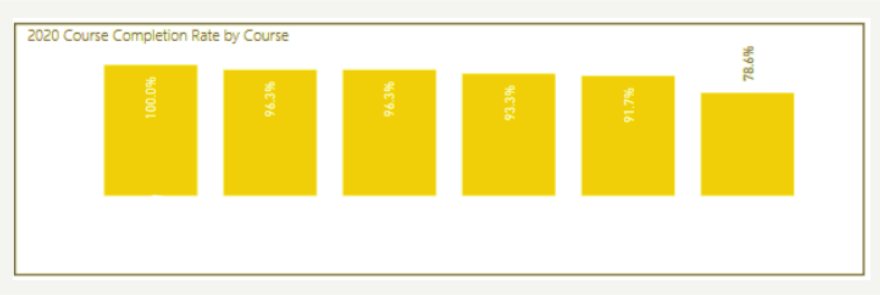
This table shows you each individual course’s completion rate.
Exemplar 3

[Qualification completion image]
This shows you the overall completion rates for the qualification – ie what % of enrolled students ‘graduated’ from your programme
Successful course completions
Look for trends in this data.
- Is a specific priority group performing better or worse than previous years.
- Is the completion % going up or down compared to previous years
- Are there any anomalies in the data (e.g. is a % over 100)
Example:
- Overall course completion is down slightly on 2019 and is at its lowest point in the last 4 years.
- Maori course completions are down significantly (17.1%)
- Pasifika course completions are up on 2019
- Under 25’s are down on previous years
- International students are up on previous year – note this is only the second year we have had international enrolments on this programme.
Completion Rate by Course
Look at the completion rates per course and consider the order the courses were delivered in. A course delivered early in the programme will likely have a higher completion rate than the last course delivered due to students dropping off.
Consider pre-requisite and co-requisite courses. What are the completion rates for these courses as that will have an effect on the other courses.
Go back to the previous years PER report – has any completion rates changed?
Example:
- courses are delivered in sequence
- the capstone course has the lowest successful completion rate (78.6%)
Qualification Completions
Look for trends in this data.
- Is a specific priority group performing better or worse than previous years.
- Is the completion % going up or down compared to previous years
- Are there any anomalies in the data (e.g. is a % over 100)
If a % rate is over 100, this could be due to the programme of study running over more than one year. You will need to comment on this in your PER report.
Remember – the % in this section will be different from the course completions.
Example:
- Note that this programme underwent a type 2 change in 2018/19 which affected reporting and therefore completion rates
- Qualification completion rates remain steady on 2019
- No māori students completed this qualification in 2020٭
- Pasifika completion rates remained steady
- U25 completion rates dropped significantly from 80% to 48.2%
- No international students completed the qualification in 2020٭
Hints and Tips
- A course is a component that makes up a programme of study
- A programme of study is what the student enrolls on
- A qualification is what the student gains when they successfully complete (pass) all the courses in the programme
- Check the efts enrolments when commenting on this – were there no students in these categories or were there no successful completions?