

There is a weird looking graph on the bottom right of the data section in your PER. This graph compares each group of priority learners against the success of all learners on your programme – that is, how well is each group of priority learners performing in comparison to all learners.
Exemplar 1

[Difference to overall prog course completion rates 1 image]
Exemplar 2
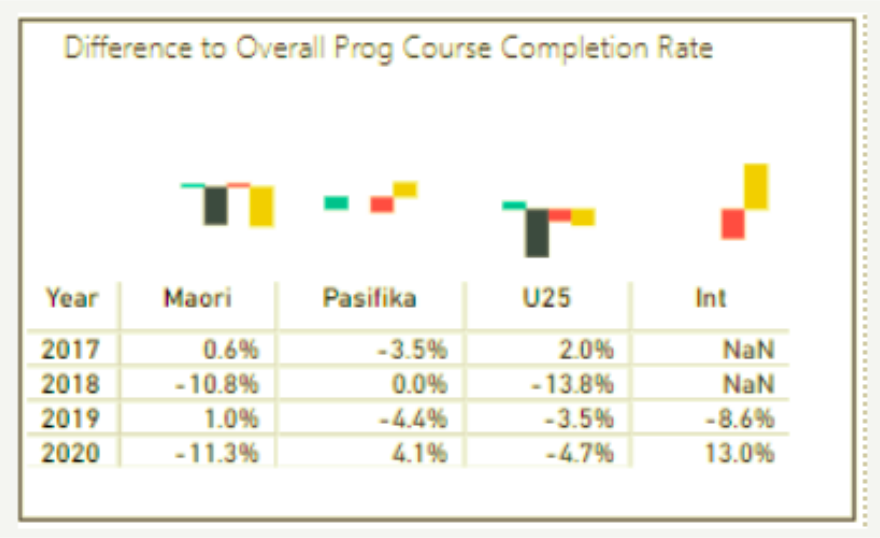
[Difference to overall prog course completion rates 2 image]
These tables show you how each group of priority learners compares against all learners on the course.
Difference To Overall Prog Course Completion Rates
- Is a specific group performing better or worse than previous years.
- In a perfect world, the % would be zero
- large variances require a comment as they show the priority groups is performing better (a positive %) or worse (a negative %) than the average student.
Example one:
- Māori tauira (students) have not achieved as well in 2020 as they did in 2019, with a decrease of 5.3% in achievement.
- Pasifika students are achieving better than last year and at a similar level to other students in the cohort.
- The majority of students on this programme are under 25 so that rate remains steady as expected.
- International student achievement has remained steady also.
Example two:
- there has been a decline in Māori student achievement in 2020, similar to what was seen in 2018.
- Pasifika student achievement has improved from last year.
- Under 25’s achievement has declined slightly but is still an improvement on 2018
- International student achievement has improved significantly.
Hints and Tips
- Consider the number of enrolments in each priority group as this can have a big effect on this data
- there might only be 1 or 2 students from a priority group on your programme and if they don’t complete a course, that will show as a large % in this data
- You can use other evidence to support any discussion around priority learners